The Pattern #199
Two MPCs, same number, different story

Mayank Jain
Head - Marketing and Content
·
Hello everyone,
Welcome to the 199th edition of The Pattern, a weekly newsletter on the latest in finance, technology, and the economy.
Two months ago, in Edition #191, I wrote about an MPC meeting where nothing happened — and argued that was a good thing. Inflation was behaving. Growth wasn't worrying. After years of reactive policy, a central bank willing to sit on its hands looked like clever restraint.
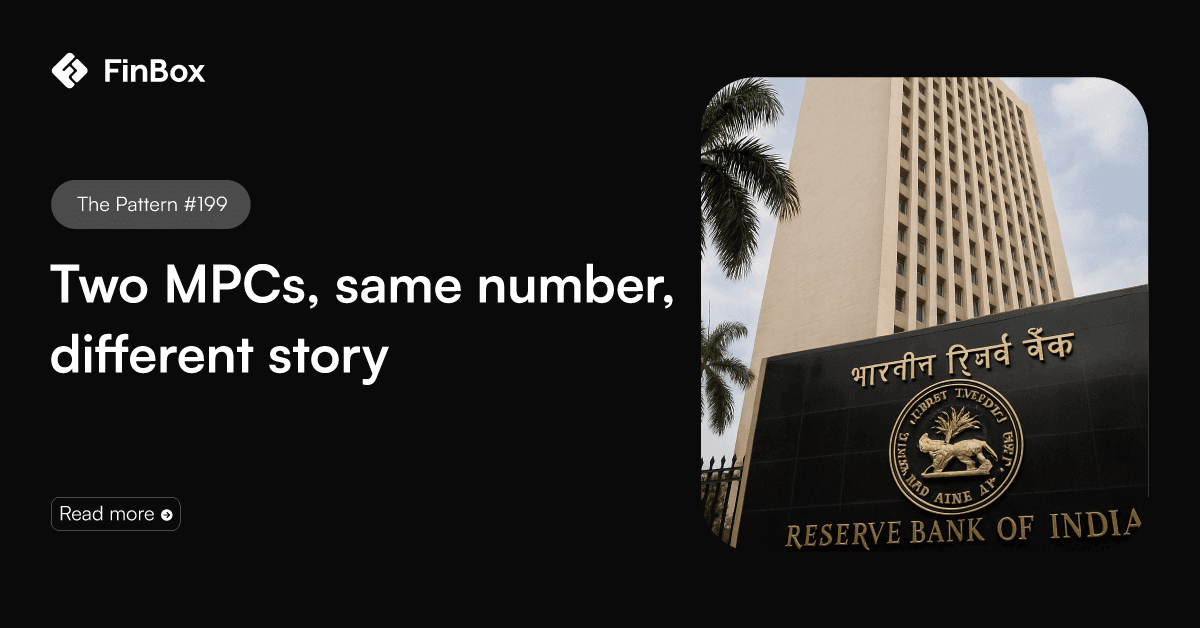
This week's MPC looks identical. On April 8, the Monetary Policy Committee unanimously kept the repo rate at 5.25% and continued with a neutral stance, in its first policy meeting for FY27. But things are very different this time around.
A pause from constraint, not comfort
The February pause was elective. The one now isn't. The decision came against the backdrop of the conflict in West Asia, which has driven a sharp increase in crude oil prices and a depreciation of the rupee. The rupee was trading around 92.56 to the dollar on the morning of the announcement, having appreciated 50 paise after Trump announced a two-week suspension of military strikes against Iran
Governor Malhotra was direct about why: "Going forward, elevated energy and other commodity prices, as also shocks to the availability of inputs due to disruptions in the Strait of Hormuz, are likely to impact growth this year." The RBI projected CPI inflation for FY27 at 4.6%, with a Q4 reading of 4.7% . In February, inflation barely featured. In April, it's the entire story.
This matters because of where it leaves the easing cycle. Between February and December 2025, the RBI cut the repo rate by a cumulative 125 basis points — its most aggressive easing cycle since 2019.
That cycle is over — and not because of anything happening inside India. It ended because a shipping lane in the Middle East got dangerous, and that's enough to change what the RBI can do.
What this does to lending math
Here's the squeeze banks are in. When the RBI cuts rates, banks have to charge less on new loans almost immediately — but they can't drop what they pay depositors as quickly, because savers will walk. So for the past year, banks have been earning less on loans while still paying the old rates on deposits. They were waiting for the gap to close. A pause means it doesn't. At least not soon.
A Crisil report notes the gap between credit growth and deposit growth has widened back to 300 basis points as of mid-March, and banks are plugging it by issuing certificates of deposit, which grew 27% year-on-year — a much more expensive way to raise money than just taking in retail savings.
Something has also flipped in how NBFCs raise money. For years, the big ones preferred to issue bonds — it was usually cheaper than borrowing from a bank. That stopped being true sometime last year. Between January 2025 and March 2026, banks' average lending rate dropped by about 90 basis points. Bond yields, after falling for a while, started climbing again from July 2025 and by March 2026 were higher than where they started. The result: large NBFCs are now choosing bank loans over bond issues. A pause at 5.25% means this stays true for a while — which rewires how a big chunk of the lending sector funds itself.
The honest read
In #191, I called a willing pause a sign of stability. I still believe that — when the choice is voluntary. What's harder to read is a pause that looks identical on paper but is happening because the alternative is worse.
For lenders planning the next two quarters, the question isn't where rates are going. It's what the book looks like if oil stays elevated, the rupee touches 94, and inflation prints closer to 5% than 4%. The credit risk doesn't sit in the rate. It sits in the borrower whose margins were already thin and is now absorbing an oil shock.
Reading list
Borrowing to survive, facing abuse: How India's credit boom is turning stressful
In big structural shift, women borrowers become a major driver of credit demand in India
RBI Proposes One-Hour Delay On Digital Payments Above Rs 10,000 To Curb Rising Fraud
Biggest Currency Clampdown in Decade Risks Backfiring for India
Thank you for reading. If you liked this edition, forward it to your friends, peers, and colleagues. You can also connect with me on X here and follow FinBox on LinkedIn to get the latest updates.
See you next week.
Cheers,
Mayank
